
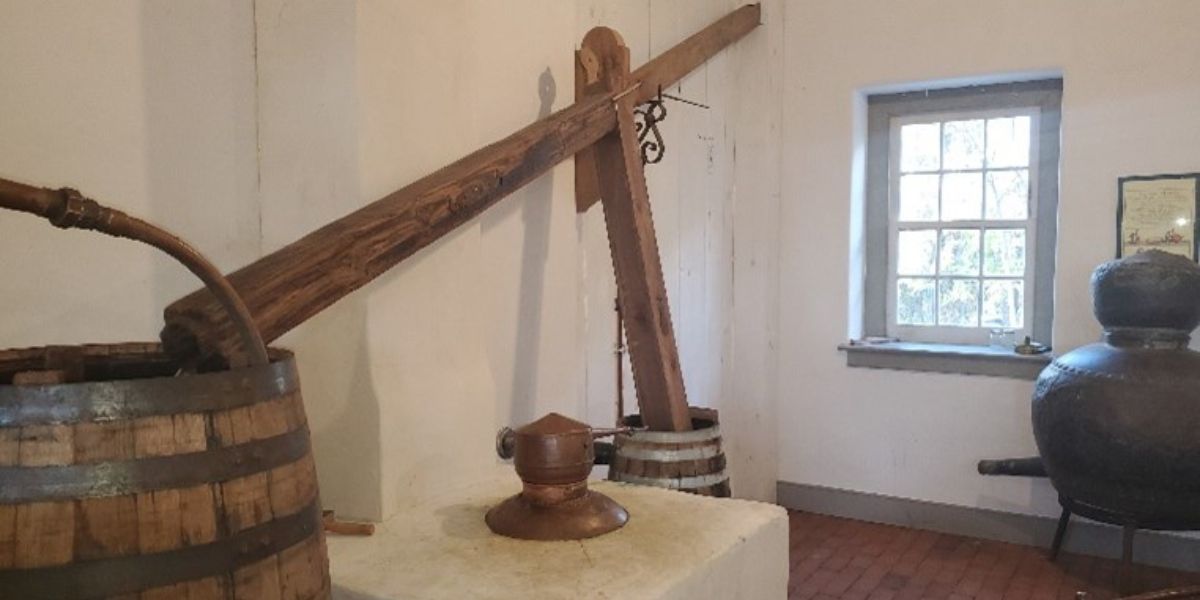
Impractical Distillers: Vol 1.9
Uisce Beatha from the Latin term aqua vitae or water of life was first used by Irish monks and pronounced “ish-ka-ba-ha”. The shortened expression was anglicized to whiskey and became an important part of Gaelic culture brought to the New World by Scots Irish immigrants.
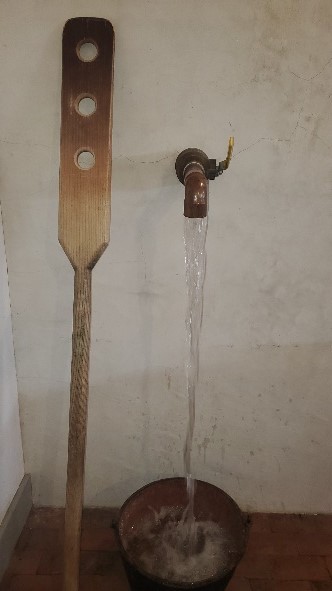 Obviously, water is a critical component in several steps of the distilling process. Equipment like barrels and tools can be sanitized with boiling water. During mashing, water at different temperatures converts the starches in grain to sugars.Yeast added to the mix of water and grain initiates fermentation which produces alcohol. Fermented mash is heated in a still creating vapor which passes through a tube immersed in a tub or condenser of cool water. The vapor condenses back to liquid and collected as “low wines”. The low wines are further refined in an additional pass through a smaller still to separate the components of the distillate. Finally, a small amount of water is added to adjust the final proof of the spirit.
Proximity to water was a key factor in choosing a site to build a distillery. Bucketing water was inefficient. Pumps, wooden troughs, and pipes used gravity to move water for various distillery operations. In a newspaper ad from 1815, the Eichelbergers described their distillery as “a still house with water overhead”. This implies water ran downhill to the facility. A site plan from 1833 shows the location to be on Campground Road along Dogwood Creek.
In today’s Eichelberger Distillery we use wooden pipes to bring in cool water for the condensers from a hand dug, pre-Civil War well.
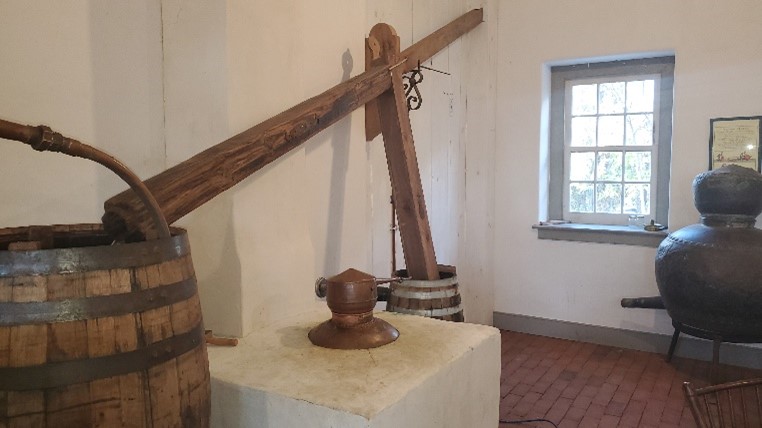 Modern disinfecting chemicals were unavailable in the 18th century. Boiling water and fire cleansed barrels of contamination. We use130-gallon, wood fired boilers to heat water. Fermenters are scrubbed and scalded with boiling water to eliminate microorganisms and bacteria hiding in crevices between the wooden staves. Mineral content, pH (acid or base) and other water properties varied significantly from one distillery to another. The distillers’ experience (and luck) made up for many of the water quality factors monitored in modern distilleries.
Sanitized or “sweetened” barrels were used for mashing and fermentation. Mashing is steeping grain in hot water. Hot water and enzymes from the grain break down long-chain starches to short-chain sugars. After several hours of repeated stirring and additional hot water, the mixture is cooled (overnight) and yeast added to initiate fermentation. In 3-5 days, fermentation is completed at about 8% alcohol. Next, the mash is transferred to a stripping still and heated. As the mash heats steam is produced. Alcohol has a lower boiling point than water so the percentage of alcohol in the head increases. Pressure builds propelling the vapor down the lyne arm to a copper worm tube immersed in cool water. This causes the vapor to condense back into a liquid. The distillate from the first run called “low wines” and is generally about 20 to 25% alcohol. An additional second pass through a smaller spirits still concentrates and refines the distillate. At this stage, heads, hearts and tails are collected and separated. Heads are more solventy, harsher alcohols while tails are heavier 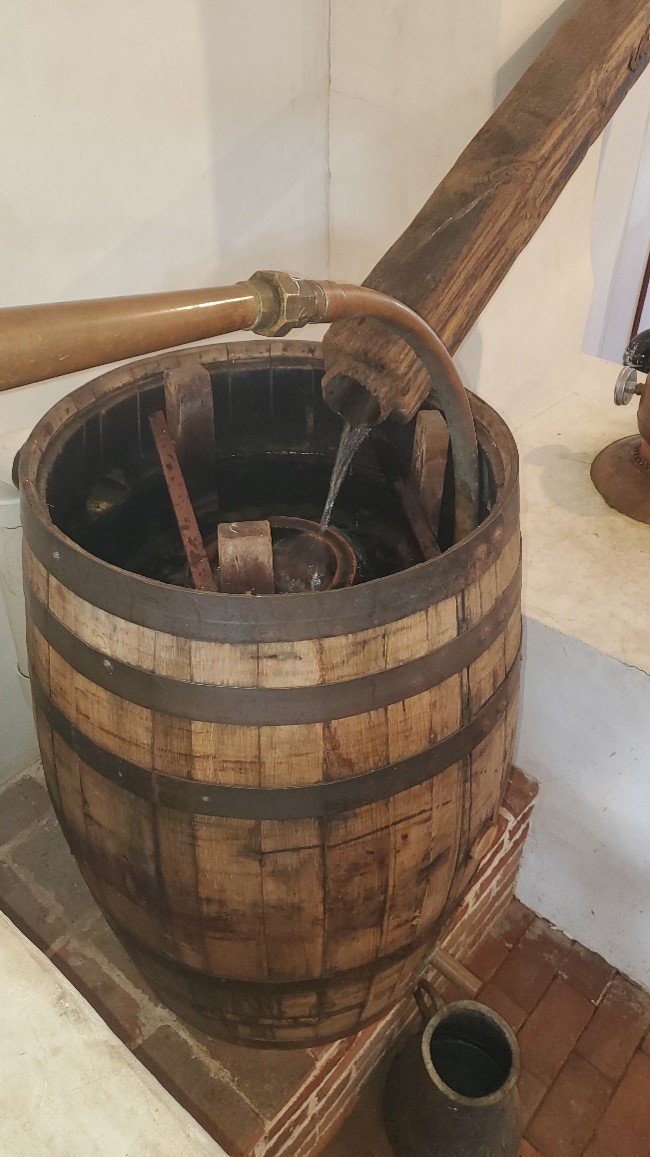 alcohols and watery. They are discarded or added to future runs. Collected hearts are mainly ethanol at 50-70% alcohol by volume (abv) which is 100-140 proof.
In a final but important role, a small amount of water is added to adjust or “proof down “the distillate from high proof (i.e. 120) to a more drinkable 100 proof spirit. The final spirit was consumed, unaged, in the 18th and early 19th centuries. Later whiskey was aged in barrels to further refine and develop typical whiskey flavors.
Mark Twain said “too much whiskey is barely enough”. A common opinion among distillers searching for an ideal distillery site was “never enough water”. Visit the Eichelberger Distillery to see the many ways the Impractical Distillers use water in their 18th century distilling process.
~The Impractical Distillers: Sam and Murray