Impractical Distillers: Vol 2.1
 At the Eichelberger Distillery we educate people about the role of distilling in the agricultural heritage of Northern York County during the late 18th and early 19th centuries. Several years ago, we were asked by a local famer involved in Dillsburg’s annual Farmer’s Fair; “what does distilling have to do with agriculture?” There was a hint of indignation in his tone. This shocking disconnect between agriculture of the past and modern times needed clarification.
Fermentation is a spontaneous event that occurs in nature without man’s effort. But, concentrating the products of fermentation through distillation required creativity, ingenuity and centuries for man to improve the techniques of spirits production. In addition to creating a beverage with a higher alcohol content, it provided a way to use excess grain before it spoiled in storage. Barrels of whiskey are more easily stored and moved about compared to tons of grain. The final bonus was higher profit. As America entered the 19th century, many Pennsylvania farmers took advantage of abundant grain harvests and nearby markets and distilled their excess grain into whiskey. During this time Pennsylvania led the nation in spirits production.
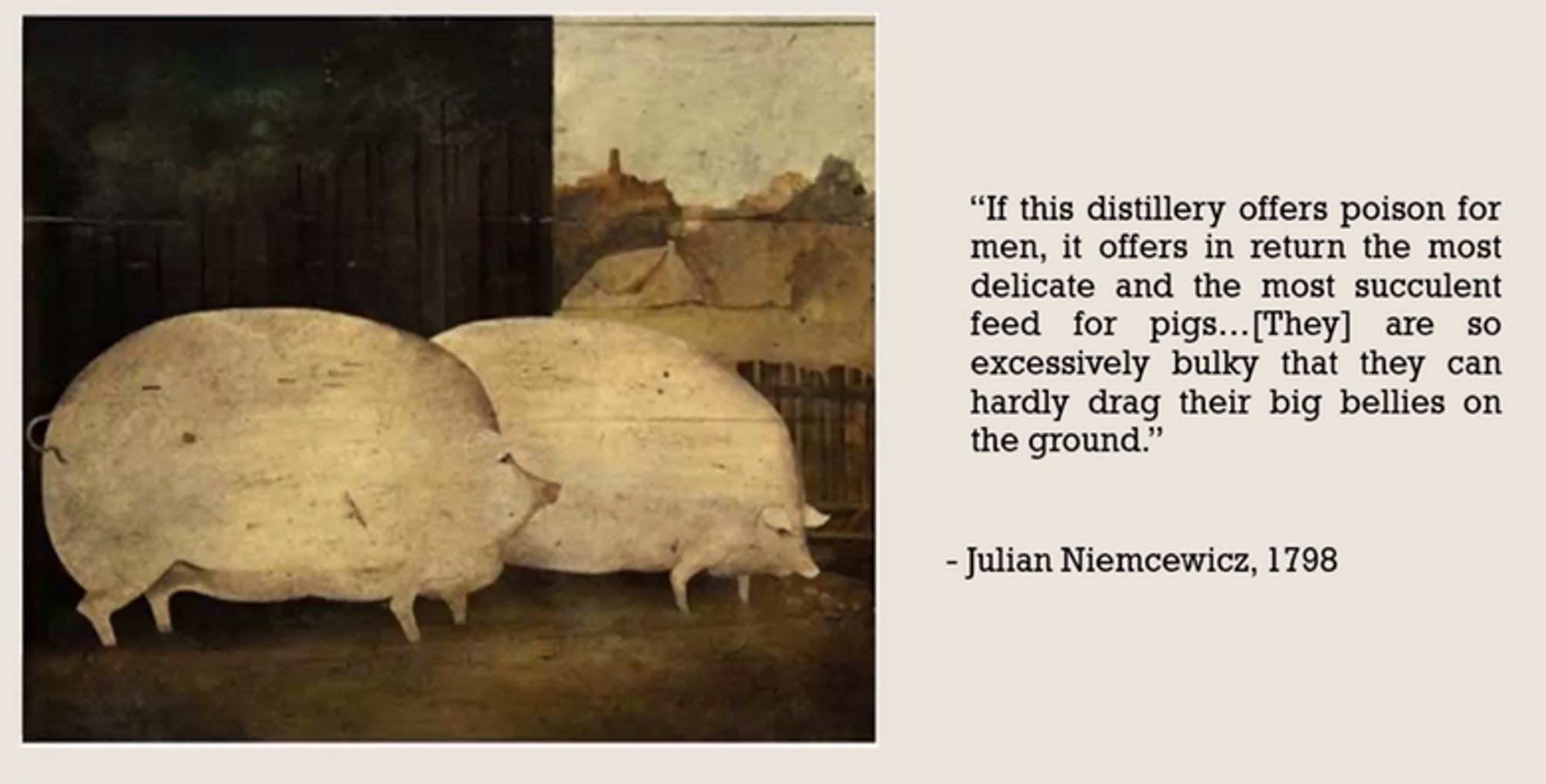
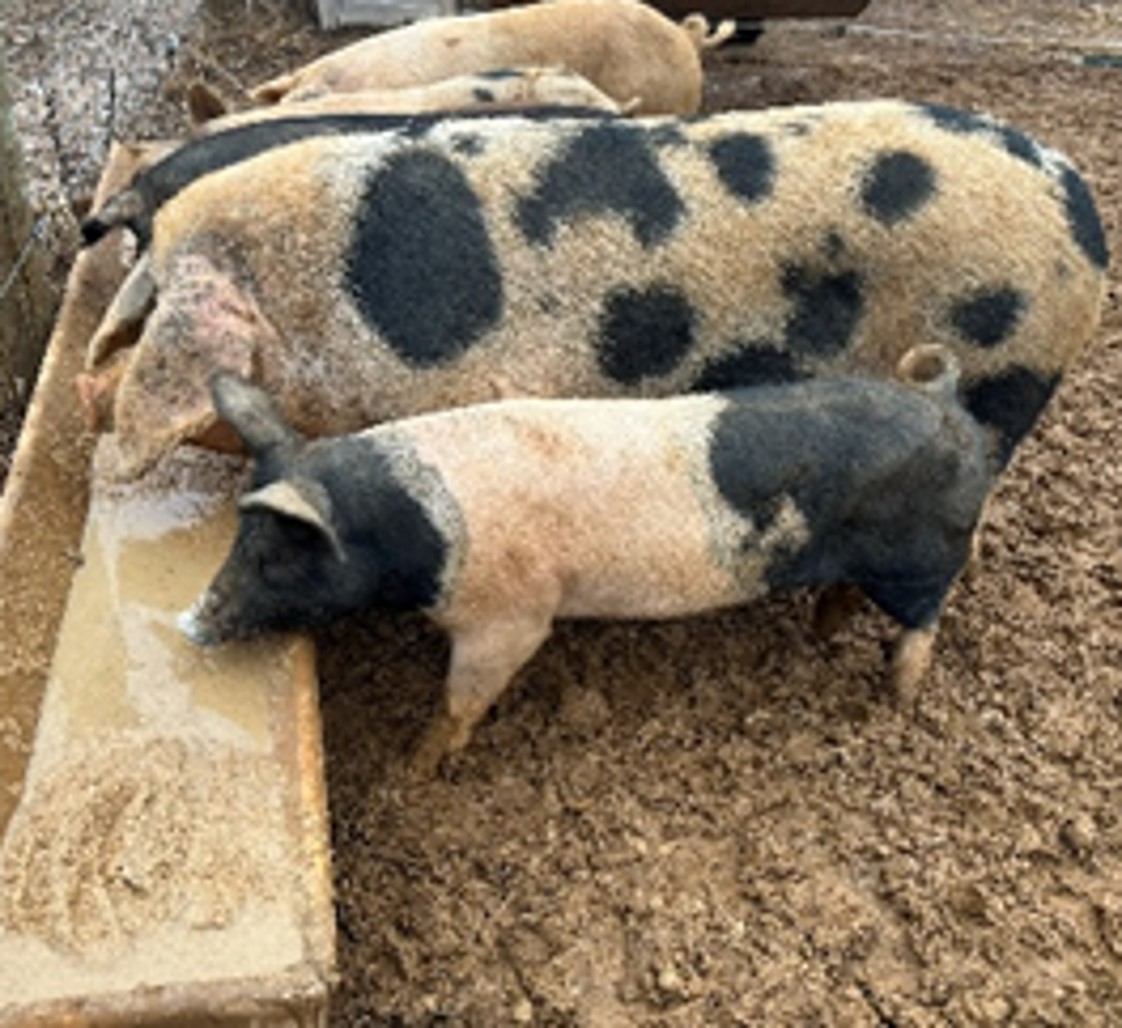 A secondary market developed for the use of a byproduct - spent mash created during whiskey production. In The Practical Distiller published in 1808, Samuel McHarry, a Lancaster County author stated “the offals of distilleries and mills cannot be more advantageously appropriated than in raising hogs – they are prolific, arrive at maturity in a short time and are always in demand”. A decade later another Pennsylvania author Harrison Hall, included a chapter in his distilling manual:” Of the advantages of feeding Swine or Cattle…”. He found hogs to be a considerable item of profit in a distillery.
A wonderful example of a period distillery building with an adjoining pig enclosure is found on the Shaeffer Farm in Shaefferstown, PA. Across the road from the stone farmhouse, once a 1770’s distillery, is the stone pig pen. The distillers had to walk mere feet to dispose of spent mash waste into the hog troughs.
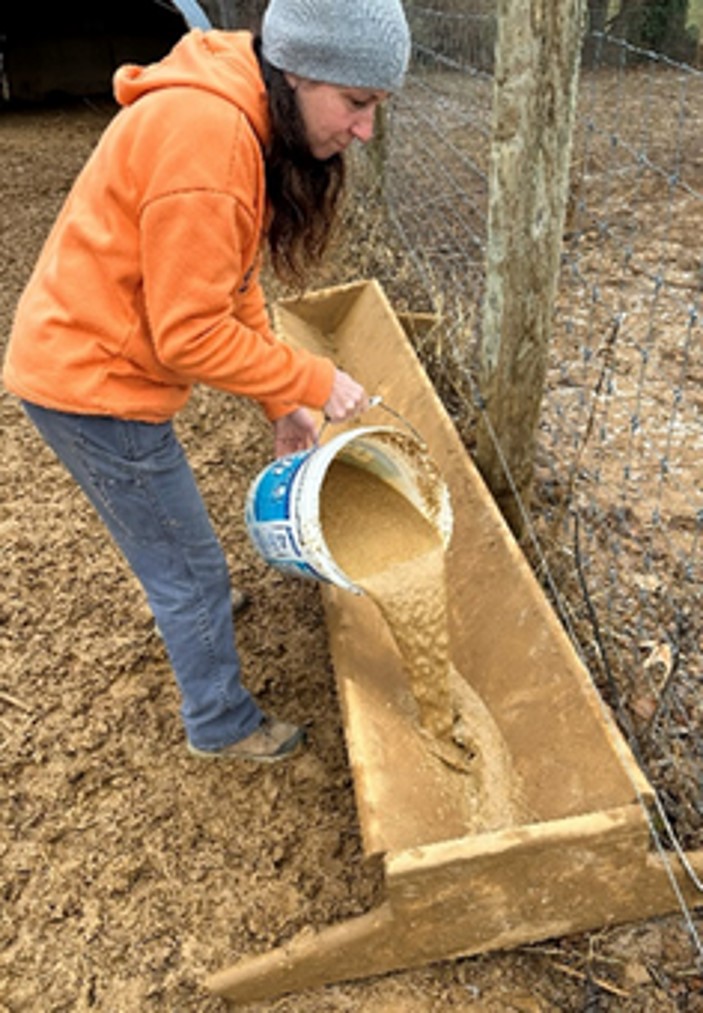 At the Eichelberger Distillery we continue the tradition of recycling mash to swine. Rowan Miller of Rowantree Farm in Mechanicsburg uses our spent mash as additional feed for her pigs. She also grows the rye we use for distillation on her 104 acre farm.
For additional information on her farm see Healthy Soil at PA Rowantree Farm. Rowan grows the grain, we distill it into whiskey, and the pigs wait by the trough for a treat! According to Rowan, the pigs recognize the site and sound of Sam’s truck delivering mash. They hurry to the trough when they see the truck coming down the driveway. The timeless cycle continues.
So, in conclusion Mr. Modern Day Farmer... distilling has a lot to do with agriculture! If you would like to see mashing or any other part of the historic distilling process, visit the Impractical Distillers at the Eichelberger Distillery.
~The Impractical Distillers: Sam and Murray